The Best Coffee Alternatives in the UK: Caffeine, Taste and Price per Cup
The best coffee alternative depends on whether you want to keep a little caffeine or none at all: mushroom coffee, tea and matcha keep some, while chicory, dandelion, barley and rooibos have none. We compare them on caffeine per cup, what they are made of and price per cup, using brand labels, NHS figures and prices checked on 29 September 2026.

What is the best coffee alternative?
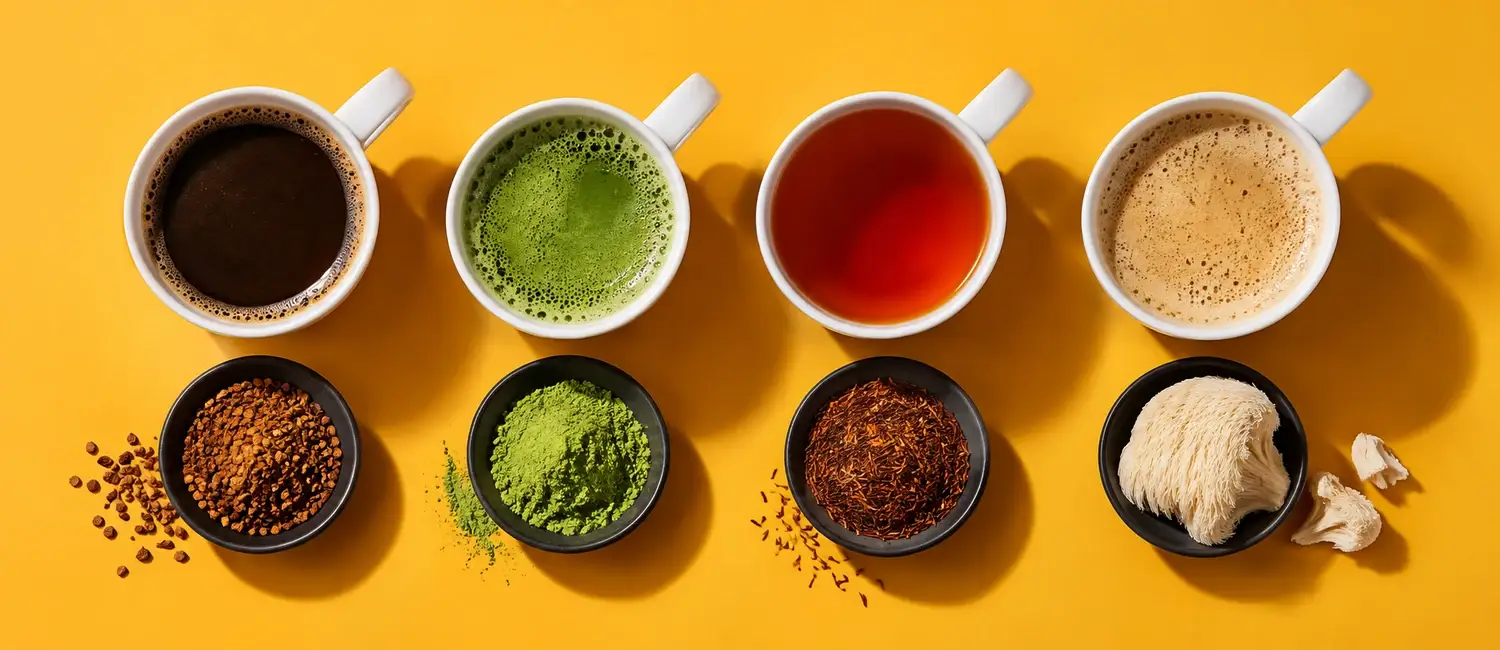
The best coffee alternative is the one that matches what you want to keep from your coffee: a mushroom coffee such as Brainstoorm (20 mg of caffeine a cup) if you want the instant-coffee ritual with less caffeine, tea or matcha if you want a moderate dose, and chicory, dandelion or rooibos if you want none.
Three questions sort the options quickly. Do you want any caffeine at all? Do you want something close to coffee, or are you happy with tea or cocoa? And how much are you willing to pay per cup? Roasted chicory, dandelion and barley are the long-standing caffeine-free swaps; mushroom coffee is the newer option on UK shelves, sold as instant powders with a printed dose per cup.
We give caffeine in milligrams wherever a brand or the NHS publishes a figure, and prices in pounds only where we could read them on 29 September 2026. Supermarket prices for chicory, dandelion, barley, tea and rooibos vary from shop to shop and we could not check them that day, so we do not quote them.
Coffee alternatives compared: caffeine and price per cup
The table puts the main UK options side by side, from the most coffee-like to the least. A mug of instant coffee, according to the NHS, contains about 100 mg of caffeine: use it as the yardstick.
| Drink | What it is | Caffeine per cup | Price per cup |
|---|---|---|---|
| Brainstoorm (Mush N Go) | Mushroom coffee, cocoa base, choc-hazelnut | 20 mg | £1.27 |
| Myracle Mushroom Coffee | Instant Arabica with mushrooms | 40 mg | £1.00 |
| Spacegoods Rainbow Dust Coffee | Coffee with mushrooms | 80 to 120 mg | £1.63 |
| Clearly Not Coffee Original | Cocoa with mushrooms | 8 mg | £1.00 |
| Decaf coffee | Coffee with most caffeine removed | Under 10 mg (Spacegoods Decaf), 4 mg (Clearly Decaf) | £1.63 and £1.00 for these two |
| Chicory | Roasted root | None | Varies by shop |
| Dandelion | Roasted root | None | Varies by shop |
| Barley | Roasted grain | None | Varies by shop |
| Matcha | Powdered green tea | Depends on the dose | £1.29 (Clearly, 2 g stick) |
| Black or green tea | Tea leaves | About 75 mg a mug (NHS) | Varies by shop |
| Rooibos | Herbal tea | None | Varies by shop |
| Cocoa and hot chocolate | Cacao | Under 25 mg per 50 g of dark chocolate (NHS) | Varies by shop |
Caffeine: brand labels and NHS pregnancy guidance (page reviewed 15 June 2026). Prices: one-off prices on the brands' UK shops on 29 September 2026. Supermarket prices were not checked.
Two things stand out. Only the roasted roots, barley and rooibos are fully caffeine-free. And "mushroom coffee" covers everything from 8 mg to 120 mg a cup, so the name alone tells you nothing about the dose.
Mushroom coffee: the coffee habit with less caffeine
Mushroom coffee keeps the ritual: a spoonful of powder, hot water or milk, a mug in the morning. Most blends contain far less caffeine than the 100 mg the NHS gives for a mug of instant coffee, though not all of them.
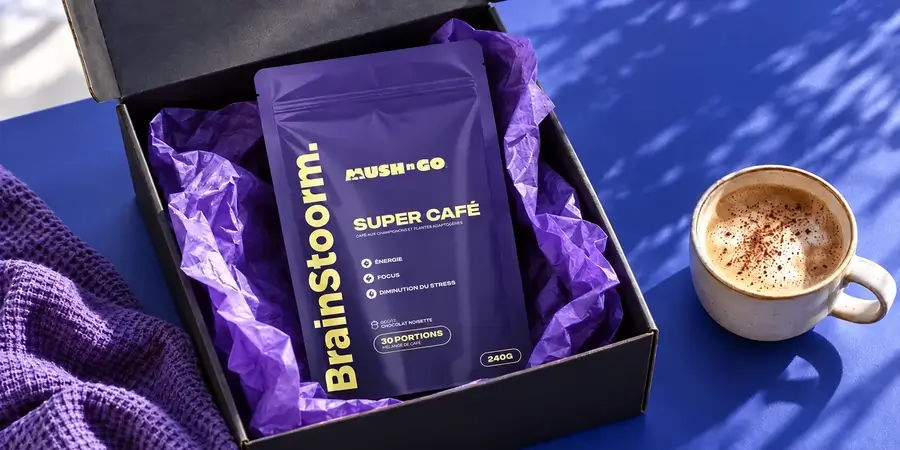
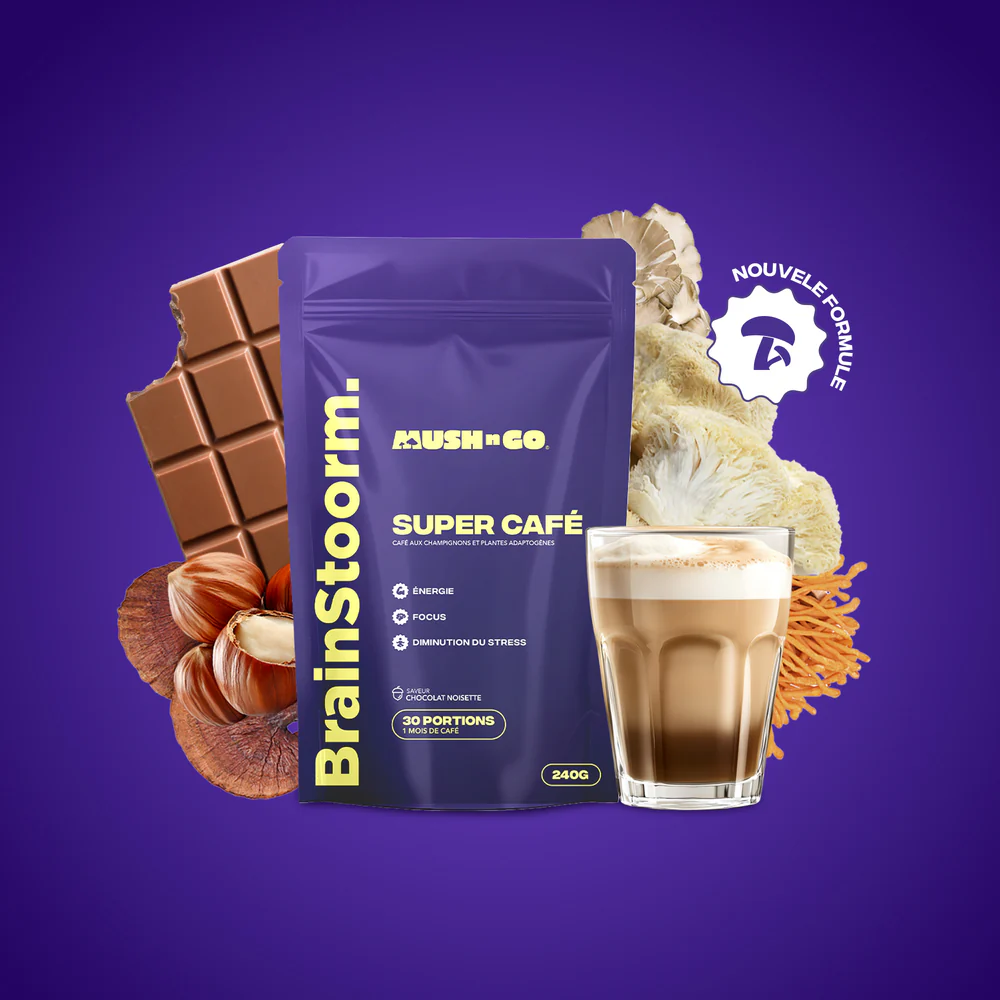
- Brainstoorm (Mush N Go): 20 mg of NewCaff caffeine per cup on the Chocolate label, a choc-hazelnut drink according to the brand. A Coffee version is sold at the same price (£38.00 for 30 servings, £1.27 a cup), but its exact label is not on the UK page, so our figures are for the Chocolate. Per cup: 6,225 mg of declared actives, the most complete formula in our top 5, and a 60-day money-back guarantee.
- Myracle Mushroom Coffee: instant Arabica with coconut milk and MCT oil, 40 mg of caffeine, £29.99 for 30 servings (£1.00 a cup).
- Spacegoods Rainbow Dust Coffee: 80 mg to 120 mg of caffeine, close to an ordinary coffee, £49.00 for 30 servings (£1.63 a cup). Its Decaf Coffee has under 10 mg.
- London Nootropics: instant coffee sachets with 80 mg to 110 mg, from £0.83 to £1.25 a sachet depending on the pack. Our London Nootropics coffee review has the details.
So mushroom coffee is not automatically low in caffeine: check the milligrams. Our guide to what mushroom coffee is and what is in the cup explains the labels, and our lion's mane coffee comparison shows the dose of lion's mane per cup, brand by brand.

Chicory coffee: the caffeine-free classic
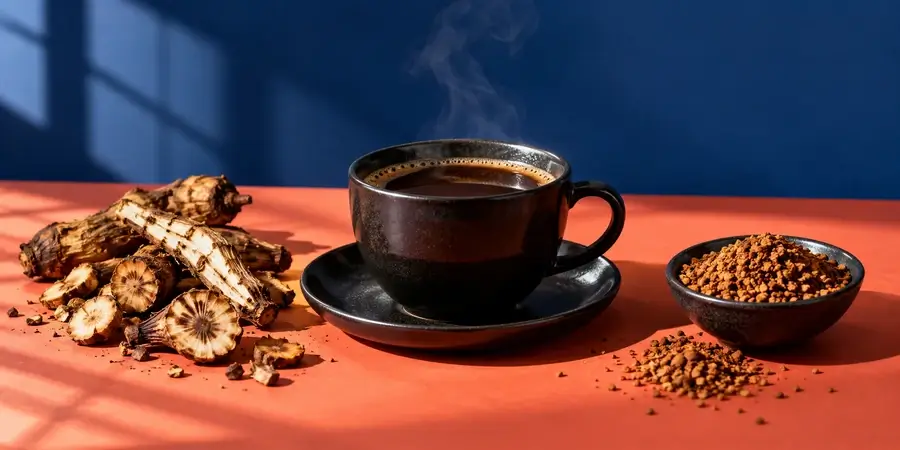
Chicory is the classic caffeine-free coffee substitute: the root of Cichorium intybus, roasted and ground or sold as instant granules, then brewed or stirred like coffee for a dark, roasted drink. A 2021 review by Janda and colleagues sets out what the root contains, including inulin (a type of fibre), phenolic compounds and minerals, and notes its long use as a coffee substitute and food additive.
Two things to check on the jar. First, whether it is pure chicory: some blends mix chicory with roasted barley or other grains, and a few mix it with coffee, which brings caffeine back. Camp, the bottled chicory essence found in many British kitchens, also contains coffee, so do not count it as caffeine-free. Second, the price: chicory is sold in supermarkets and health food shops at prices that vary widely, and we could not check them on 29 September 2026.
Dandelion and barley coffee
Dandelion "coffee" is made from roasted dandelion root, and barley "coffee" from roasted barley grains, sold in Italy as caffè d'orzo. Both are caffeine-free and made like coffee, either brewed from the roasted root or grain or stirred in as instant granules. You will often find them blended with chicory, and they give a roasted, malty cup rather than a copy of coffee.
Barley contains gluten, so barley coffee is not suitable for people with coeliac disease, and the same goes for any chicory or dandelion blend that includes barley. Read the ingredients list too: in some products sold as dandelion coffee, dandelion is only one of several roasted ingredients.
As with chicory, prices in supermarkets and health food shops vary and we could not check them on 29 September 2026. If you have never had a roasted-root drink, buy a small jar first to find out whether the taste suits you.
Matcha, green tea and rooibos
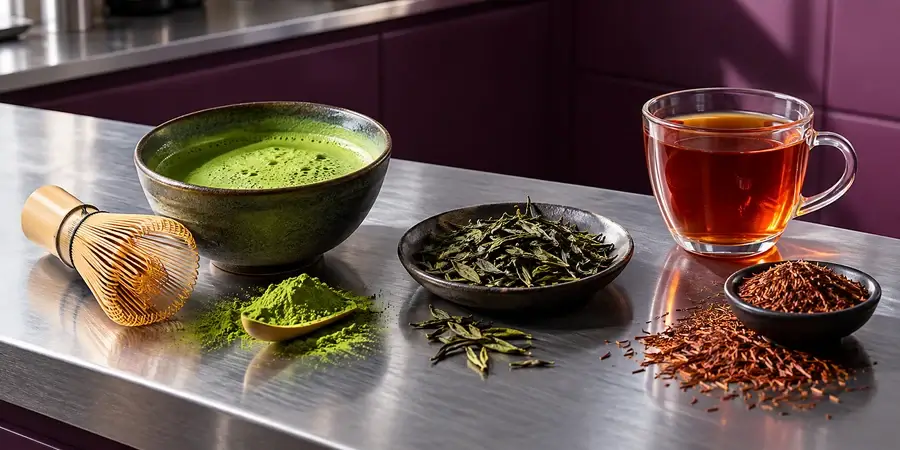
Tea keeps some caffeine. The NHS puts a mug of black or green tea at about 75 mg in its pregnancy guidance, while its breastfeeding page gives 55 mg for a mug of tea and 38 mg for green tea, which shows how much a mug can vary with the brew. That is still less than the 100 mg it gives for a mug of instant coffee.
Matcha is powdered green tea whisked into water, so you drink the whole leaf. There is no standard caffeine figure: it depends on how many grams you use, so check the brand's label. As a price example, Clearly sells matcha in 2 g sticks at £27.00 for 21 on its UK shop (£1.29 a stick, checked on 29 September 2026).
Rooibos, the red bush tea from South Africa, is caffeine-free and can be drunk with or without milk like a regular cup of tea. Most herbal teas are caffeine-free too, but in pregnancy the NHS asks you to limit them, which we cover in the last section of this guide.
Cacao and mushroom hot chocolate
Cocoa is not caffeine-free, but it contains much less than coffee. The NHS gives under 25 mg for a 50 g bar of dark chocolate and under 10 mg for 50 g of milk chocolate. Mushroom cocoa drinks sit in the same range unless caffeine is added: Clearly Not Coffee Original contains 8 mg per cup from its 4,000 mg of cacao, while Variety Mode's Gold Dust Cocoa adds 50 mg of caffeine to a cocoa base (its Vanilla version has none, according to the brand; more in our Variety Mode Gold Dust review).
So a mushroom hot chocolate can be a low-caffeine morning drink or an evening cup, depending on the version you pick. Our guide to mushroom hot chocolate in the UK compares mushrooms, sugar, caffeine and price per cup across the cocoa blends.
How to cut down on coffee without the headaches
Stopping coffee abruptly is what causes most of the trouble. A 2004 review by Juliano and Griffiths, covering 57 experimental studies and 9 surveys, confirmed a caffeine withdrawal syndrome: headache (in about half of people in the experimental studies), tiredness, drowsiness, irritability and difficulty concentrating among the validated symptoms. They usually began 12 to 24 hours after the last dose, peaked between 20 and 51 hours, and lasted 2 to 9 days. They appeared even in people giving up as little as 100 mg a day, roughly one mug of instant coffee.
A gentler route:
- Add up your current intake in milligrams, using the NHS figures: about 100 mg for a mug of instant coffee, 75 mg for a mug of tea.
- Replace one drink at a time, every few days, starting with the latest one of the day.
- Use a lower-caffeine step on the way down: tea, a 20 mg to 40 mg mushroom coffee, or decaf.
- Keep caffeine away from the evening. In a 2013 study, 400 mg of caffeine taken even six hours before bedtime disturbed sleep compared with a placebo.
A worked example with the NHS figures: three mugs of instant coffee come to about 300 mg a day. Swapping the afternoon mug for tea brings that to about 275 mg; swapping a second mug for a 20 mg mushroom coffee brings it to about 195 mg. A week or two later the last coffee can go as well, leaving a mug of tea and a low-caffeine cup at around 95 mg, or a caffeine-free chicory if you want to go further.
Coffee alternatives in pregnancy
The NHS advises no more than 200 mg of caffeine a day in pregnancy, because too much is linked to a higher risk of miscarriage and stillbirth. Its guide gives about 100 mg for a mug of instant coffee (filter coffee and coffee from shops can contain more), 75 mg for a mug of tea, 40 mg for a can of cola, 80 mg for a 250 ml can of energy drink and under 25 mg for a 50 g bar of dark chocolate. The same 200 mg limit applies when breastfeeding.
For herbal drinks, the NHS suggests no more than 4 cups of herbal tea a day in pregnancy and advises avoiding liquorice root teas. Chicory, dandelion, barley and rooibos contain no caffeine, but check any blend for liquorice, and ask your midwife if you are unsure about a particular drink.
Mushroom coffees are a separate case. There is no pregnancy data on lion's mane, cordyceps, chaga or reishi, several blends add ashwagandha, and Holland & Barrett's listing for Spacegoods Rainbow Dust Coffee says it is not intended for pregnant or breastfeeding women. Brainstoorm also contains 200 mg of ashwagandha, so ask your midwife or GP before drinking any of them. The links to shops on this site are affiliate links, and our top 5 only lists partner brands: see our UK ranking of mushroom coffees for the full labels.
Coffee alternatives: frequently asked questions
What is the best replacement for coffee?
It depends on what you want to keep. For the instant-coffee habit with less caffeine, a mushroom coffee such as Brainstoorm (20 mg a cup) or Myracle (40 mg) is the closest swap. For some caffeine without coffee, tea or matcha. For none at all, chicory, dandelion, barley or rooibos. Check the label, since some mushroom coffees contain as much caffeine as coffee.
What will wake me up instead of coffee?
No drink can honestly promise that, and no such claim is authorised in the UK for the mushrooms and plants sold in coffee alternatives. If you want a smaller dose of caffeine rather than none, tea (about 75 mg a mug, according to the NHS) or a mushroom coffee with 20 mg to 40 mg keeps some. Chicory, dandelion and rooibos contain none.
Is there a coffee alternative that tastes like coffee?
Without caffeine, roasted drinks come closest: chicory, dandelion and barley are brewed like coffee and give a dark, roasted cup. If you want a real coffee base with less caffeine, a mushroom coffee built on Arabica, such as Myracle at 40 mg a cup, keeps it, and decaf keeps the taste with under 10 mg in Spacegoods' Decaf Coffee.
Which coffee alternatives are safe in pregnancy?
The NHS sets a limit of 200 mg of caffeine a day in pregnancy and suggests no more than 4 cups of herbal tea a day, avoiding liquorice root tea. Chicory, dandelion, barley and rooibos contain no caffeine. Mushroom coffees have no pregnancy data and some contain ashwagandha, so ask your midwife or GP before drinking them.
Sources
- NHS (2026). Foods to avoid in pregnancy (caffeine and herbal teas). nhs.uk (page last reviewed 15 June 2026, read on 29 September 2026). NHS
- NHS (2026). Breastfeeding and diet (caffeine and breastfeeding). nhs.uk (page last reviewed 15 May 2026, read on 29 September 2026). NHS
- Juliano LM, Griffiths RR (2004). A critical review of caffeine withdrawal: empirical validation of symptoms and signs, incidence, severity, and associated features. Psychopharmacology. PubMed 15448977
- Janda K, Gutowska I, Geszke-Moritz M et al. (2021). The Common Cichory (Cichorium intybus L.) as a Source of Extracts with Health-Promoting Properties-A Review. Molecules (Basel, Switzerland). PubMed 33807029
- Drake C, Roehrs T, Shambroom J et al. (2013). Caffeine effects on sleep taken 0, 3, or 6 hours before going to bed. Journal of clinical sleep medicine : JCSM : official publication of the American Academy of Sleep Medicine. PubMed 24235903
- Department of Health and Social Care (2026). Great Britain nutrition and health claims (NHC) register. Department of Health and Social Care, gov.uk (last updated 19 May 2026, read on 29 September 2026). GOV.UK
This information is general and does not replace advice from your GP, midwife, pharmacist or a registered dietitian. The studies describe the state of research and are not authorised health claims for any product.

Read next
Mushroom Coffee: What Is It, and Is It Really Good for You?
What mushroom coffee is, what is really in the cup, how much caffeine it has and what the research does and does not show.
Mushroom Hot Chocolate UK: Best Mushroom Cacao for 2026
Mushroom cacao blends sold in the UK compared on mushrooms, sugar, caffeine and price per cup.
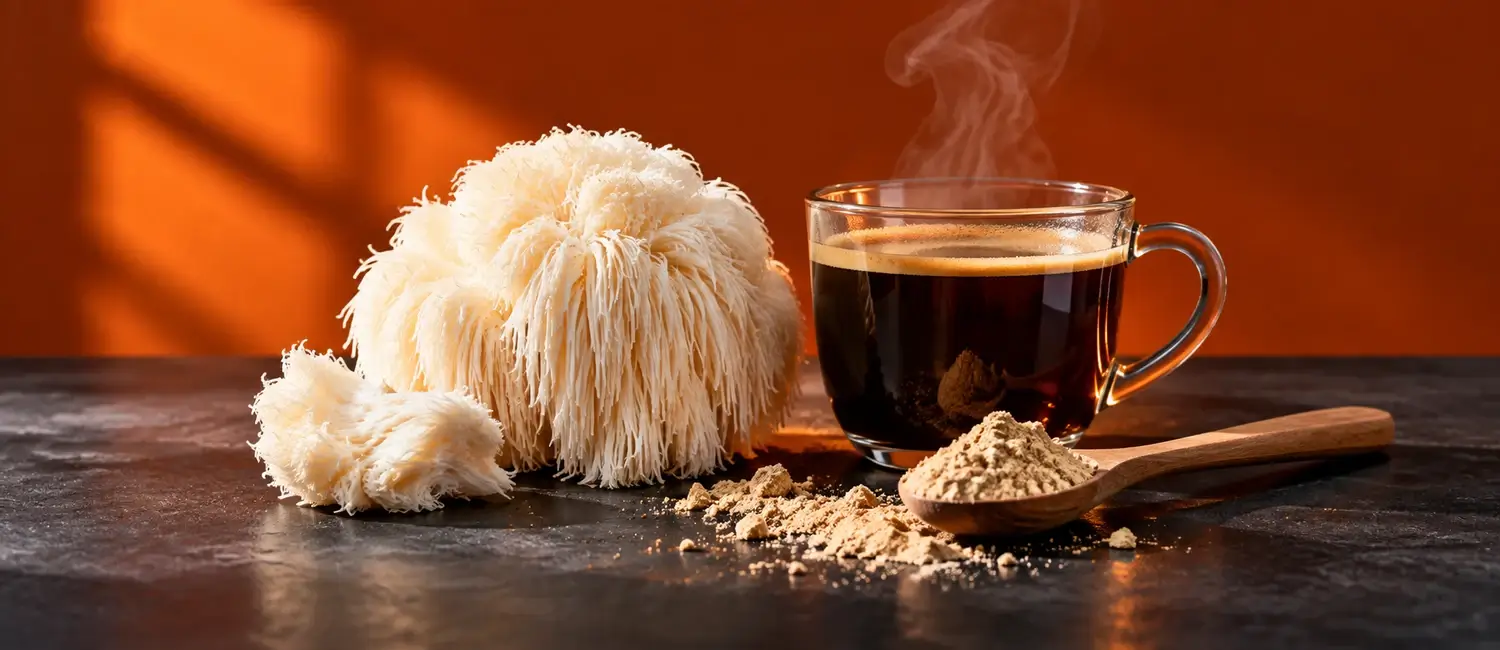
Lion's Mane Coffee UK: How Much Is Really in Your Cup?
How many milligrams of lion's mane each brand puts in a cup, extract or powder, and the price per cup in pounds.