
Lion's Mane Coffee UK: How Much Lion's Mane Is Really in Your Cup?
Lion's mane coffee is coffee, or a coffee-style powder, with lion's mane mushroom added, and the dose varies far more than the marketing suggests: from 250 mg to 1,000 mg per cup among the UK brands that publish it. Below, we compare milligrams per cup, extract or powder, fruiting body or mycelium, caffeine and price per cup in pounds, from labels and prices checked on 29 September 2026.

What is lion's mane coffee?
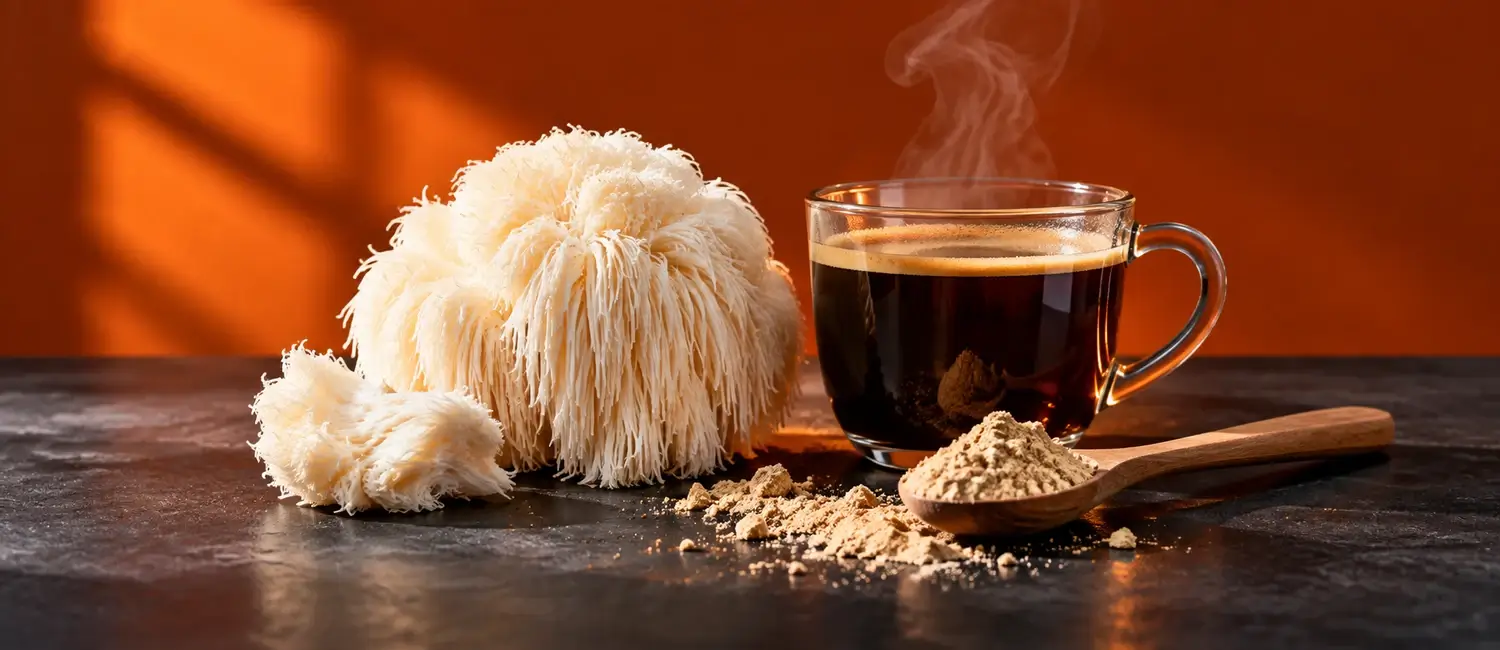
Lion's mane coffee is a coffee drink, usually instant or ground, blended with lion's mane (Hericium erinaceus), an edible mushroom added either as a dried powder or as a concentrated extract, with between 250 mg and 1,000 mg of lion's mane per cup among the UK brands that publish a figure. It is sold as a food, so the numbers worth reading are the dose per cup, the form and the caffeine.
Some lion's mane mushroom coffees use it on its own (Dirtea Coffee, London Nootropics Flow). Others mix it with cordyceps and chaga (Brainstoorm, Spacegoods Rainbow Dust), and a few are really cacao drinks with mushrooms (Clearly Not Coffee Original, Variety Mode Gold Dust). Our explainer on what mushroom coffee actually is covers the whole category.
No pouch can promise results in Great Britain: no health claim for lion's mane is authorised on the GB nutrition and health claims register. This guide sticks to what can be checked.
How much lion's mane is in each brand's cup? The UK table
We read the UK product pages of ten lion's mane drinks on 29 September 2026 and noted the dose per cup wherever the brand gives one. Three groups appear: 1,000 mg, 500 mg and 250 mg. Three ground coffees give no usable figure per cup.
| Product | Lion's mane per cup | Other mushrooms per cup | Caffeine per cup |
|---|---|---|---|
| <strong>Brainstoorm</strong> (Mush N Go) | 1,000 mg | Cordyceps and chaga, 1,000 mg each | 20 mg |
| Spacegoods Rainbow Dust | 1,000 mg | Cordyceps sinensis and chaga, 1,000 mg each | 80 to 120 mg (Coffee) |
| Variety Mode Gold Dust Cocoa | 1,000 mg | Cordyceps, reishi, chaga, 1,000 mg each | 50 mg (added) |
| Dirtea Coffee | 1,000 mg of extract per 2.5 g | None | 50 mg (product page) |
| Clearly Not Coffee Original | 500 mg | Four species, 500 mg each | 8 mg |
| Myracle Mushroom Coffee | 500 mg | Five species, 1,600 mg in total | 40 mg |
| London Nootropics Flow | 250 mg of extract | None | 80 to 110 mg |
| Balance Lion's Mane Coffee (ground) | "1,800mg" advertised, not per cup | None listed | "20% less", no figure |
| Cheerful Buddha Lion's Mane Coffee (ground) | Not stated per cup | None listed | Not published |
| Quirky Monkey Lion's Mane Coffee Fusion (ground) | Not stated per cup | None listed | Not published |
As declared on each brand's UK product page, 29 September 2026. Brainstoorm: Chocolate version (the Coffee version's exact composition is not published on the UK shop).
Dirtea puts 1,000 mg of lion's mane extract into a 2.5 g serving: the same figure as the top of our ranking, at a lower price per cup (see our Dirtea coffee review). And the biggest numbers come without a "per cup". Balance says its 250 g bag makes 15 cups but not how much of its 1,800 mg ends up in one, and Cheerful Buddha prints milligram figures without saying whether they apply to the bag or to a cup.
London Nootropics sits at the other end, with 250 mg in a Flow sachet and 80 to 110 mg of caffeine, as our London Nootropics coffee review details.

Extract, powder or tincture: why the milligrams on the label are not enough
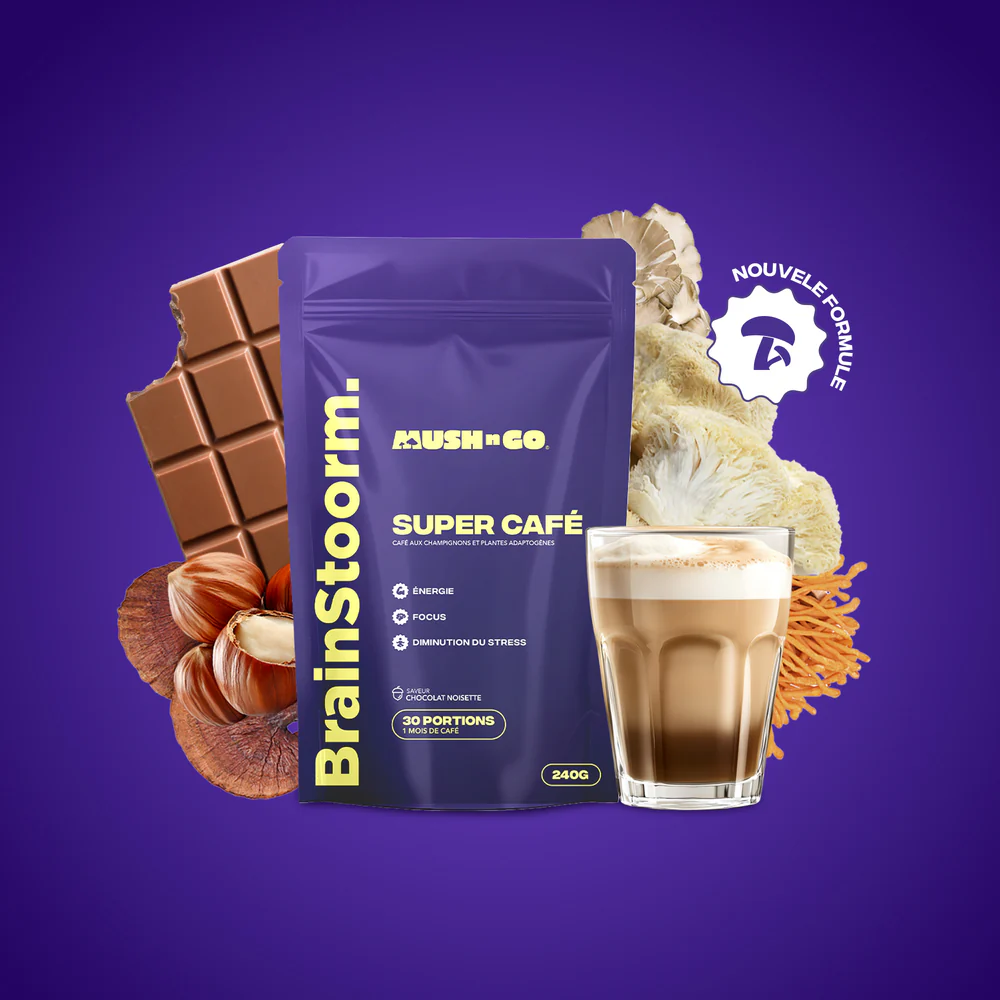
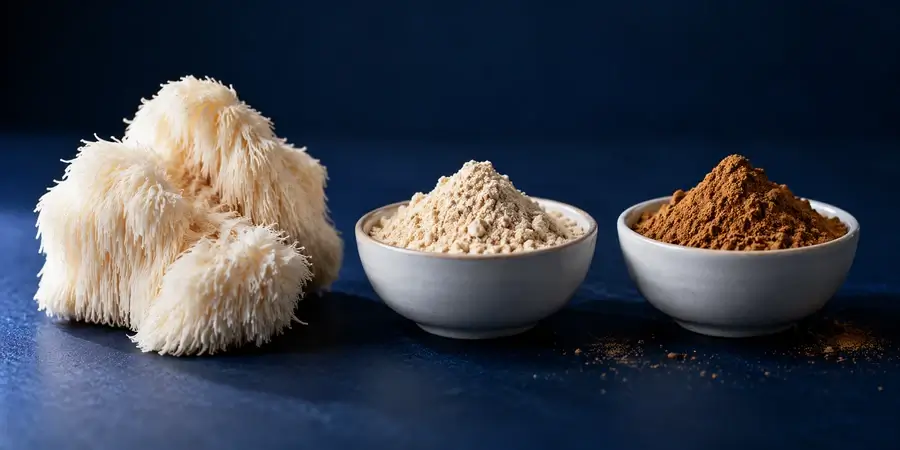
A milligram of lion's mane is not always the same thing. Brands use the dried mushroom milled into a powder, a concentrated extract or a liquid tincture. An extract draws compounds out of the mushroom with hot water, alcohol or both ("dual extraction"), then dries the result. A 10:1 ratio means roughly 10 parts of dried mushroom went into 1 part of extract.
On paper, 1,000 mg of a 10:1 extract comes from about 10 g of dried mushroom, while 1,000 mg of powder is simply 1 g. The catch: most UK labels do not print the ratio, and it can vary within one range. Spacegoods' product page gives 12:1 for its chaga, while its help centre lists 4:1 for the chaga and 5:1 for the lion's mane in the Coffee flavour.
Some brands publish a beta-glucan share instead. Dirtea says its extract contains more than 40% beta-glucans; London Nootropics gives 45% for the Hifas da Terra extract in Flow. Beta-glucans are polysaccharides from the mushroom's cell walls, and a declared percentage at least tells you what was measured.
Tinctures are drops for your own cup (Balance, for one, sells a Lion's Mane Elixir in 50 ml bottles). The dose depends on how many drops you use, so they stay out of our tables.
Fruiting body or mycelium?
The fruiting body is the part of the mushroom you would spot on a tree: for lion's mane, the white, shaggy globe. Mycelium is the root-like network beneath it, often grown commercially on sterilised grain, and some of that grain can end up in the powder. That is why brands now print "fruiting body" on the pouch.
The two parts are not chemically identical: a 2015 review from the US Department of Agriculture (Friedman) surveys the compounds found in each. What can be measured is beta-glucan. A 2016 method paper from Megazyme (McCleary and Draga) measures total glucan, then alpha-glucan (starch and glycogen) separately, and takes beta-glucan as the difference. A loose "polysaccharides" figure on a grain-grown product can include starch; a beta-glucan percentage measured this way is designed to leave it out.
What the brands in our table declare on their UK pages:
- Brainstoorm: fruiting bodies only, according to Mush N Go.
- Spacegoods Rainbow Dust: fruiting bodies.
- Dirtea Coffee: organic, dual-extracted fruiting bodies, more than 40% beta-glucans.
- London Nootropics Flow: Hifas da Terra extract with 45% beta-glucans.
We have not had any of these products analysed: these are the brands' own statements.
How much lion's mane did the studies use?
Human trials on lion's mane are few, small and short, and they used more lion's mane than any cup contains. The three most cited:
- Mori and colleagues, 2009: 30 Japanese adults aged 50 to 80 with mild cognitive impairment, 15 per group, took about 3 g a day of dried lion's mane powder in tablets for 16 weeks. Scores on a test scale were higher than with placebo at weeks 8, 12 and 16, then fell back four weeks after the trial ended. Small, older group, and the lead author worked for a Japanese mushroom company.
- Docherty and colleagues, 2023 (Northumbria University): 41 healthy adults aged 18 to 45, 1.8 g a day for 28 days. One computer task was completed faster 60 minutes after the first dose; most other measures showed no difference, and the authors ask for caution given the small sample.
- Surendran and colleagues, 2025: 18 young adults, a single dose of 3 g of a 10:1 fruiting body extract. No significant effect on the overall scores 90 minutes later, and two of the authors were employed by a company selling drinks made with lion's mane.
Set those doses beside a cup. The 1,000 mg in Brainstoorm, Spacegoods, Gold Dust or Dirtea is a little over half of Docherty's 1.8 g and a third of Mori's 3 g. Surendran's 3 g of a 10:1 extract corresponds, on paper, to about 30 g of dried mushroom. The studies do not tell you what a daily cup does; they give you a sense of scale.
Lion's mane coffee price per cup in pounds
Price per cup is the pack price divided by the servings the brand declares. Here we add one more column: how much lion's mane each pound buys.
| Product | Pack (one-off) | Price per cup | Lion's mane per £1 |
|---|---|---|---|
| Dirtea Coffee | £38.00, 60 servings | £0.63 | About 1,580 mg |
| <strong>Brainstoorm</strong> (Mush N Go) | £38.00, 30 servings | £1.27 | About 790 mg |
| Variety Mode Gold Dust Cocoa | £40.00, 30 servings | £1.33 | 750 mg |
| Spacegoods Rainbow Dust | £49.00, 30 servings | £1.63 | About 610 mg |
| Clearly Not Coffee Original | £30.00, 30 servings | £1.00 | 500 mg |
| Myracle Mushroom Coffee | £29.99, 30 servings | £1.00 | 500 mg |
| London Nootropics Flow | £60.00, 60 sachets | £1.00 | 250 mg |
| Balance Lion's Mane Coffee | £29.99, 15 cups | £2.00 | Cannot be worked out |
One-off prices on each brand's UK shop, 29 September 2026. Lion's mane per £1 = milligrams per cup divided by price per cup, rounded.
On this measure Dirtea is well ahead, with roughly twice as much lion's mane per pound as Brainstoorm. If that is all you care about, Dirtea is the one to look at. Flow gets cheaper in bigger boxes (£0.83 a sachet in the 240-sachet box), but still gives the least lion's mane per pound.
What the table leaves out is everything else in the cup. Brainstoorm's £1.27 buys three mushrooms at 1,000 mg each plus maca, acacia fibre, cacao, ashwagandha and rhodiola; Dirtea's £0.63 buys lion's mane, coffee, maca and B vitamins. Whether the extras are worth it is your call.
Lattes, pods, instant and ground: the formats sold in the UK
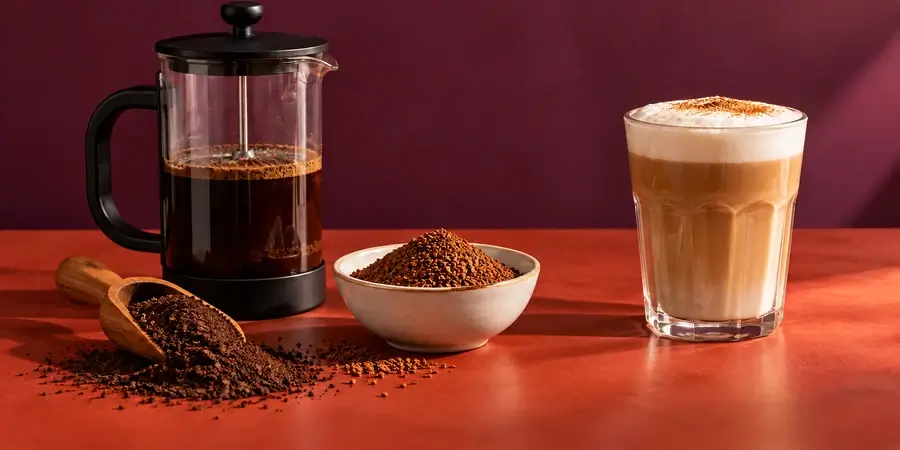
Lion's mane coffee comes in five formats in the UK, and each handles the dose differently.
- Instant powders (Brainstoorm, Spacegoods, Clearly, Myracle, Dirtea, Gold Dust): one scoop, and a label written per serving, so they are the easiest to compare.
- Single sachets (London Nootropics, plus travel sachets from Dirtea and Myracle, whose range is covered in our Myracle review): a fixed dose per sachet.
- Ground coffee for a cafetière or moka pot (Balance, Cheerful Buddha, Quirky Monkey): the dose per cup depends on how much coffee you use, and none of the three prints one.
- Lattes: Cheerful Buddha sells a Lion's Mane Latte at £12.99, with no caffeine according to the brand, and any instant powder becomes a latte with steamed milk. Many people look for the lion's mane latte from M&S: we could not confirm on 29 September 2026 that it is still sold, nor at what dose.
- Pods: among the brands we compared, the only pods we found were Balance's Nespresso-compatible capsules, and their listing does not mention lion's mane. Ask for the milligrams per pod before you buy.
We did not check marketplace listings such as Amazon, where prices and pack sizes can differ.
Can you put lion's mane powder in your own coffee?
Yes: lion's mane powders are sold on their own for exactly that. Dirtea's Lion's Mane Mushroom Powder costs £38.00 for 60 g, or 30 servings of 2 g with 2,000 mg of lion's mane each according to the brand: about £1.27 a serving, before the coffee.
- Read the label: extract or powder, ratio, fruiting body, beta-glucan share.
- Watch the caffeine: a mug of instant coffee has about 100 mg according to the NHS, five times the 20 mg in a cup of Brainstoorm.
- Do not forage it: wild lion's mane, listed as "hedgehog fungus" (Hericium erinaceum), is on Schedule 8 of the Wildlife and Countryside Act 1981. In England and Wales, intentionally picking, uprooting or destroying it, or selling wild lion's mane or anything made from it, is an offence under section 13; Scotland has its own version. Cultivated lion's mane is not covered.
Does lion's mane interact with caffeine? We found no human study testing the two together, so there is no data either way. The caffeine is the part with clear NHS limits: no more than 200 mg a day in pregnancy. If you take medicines or have allergies, read our page on lion's mane side effects and who should avoid it first.
Our pick for lion's mane coffee in the UK
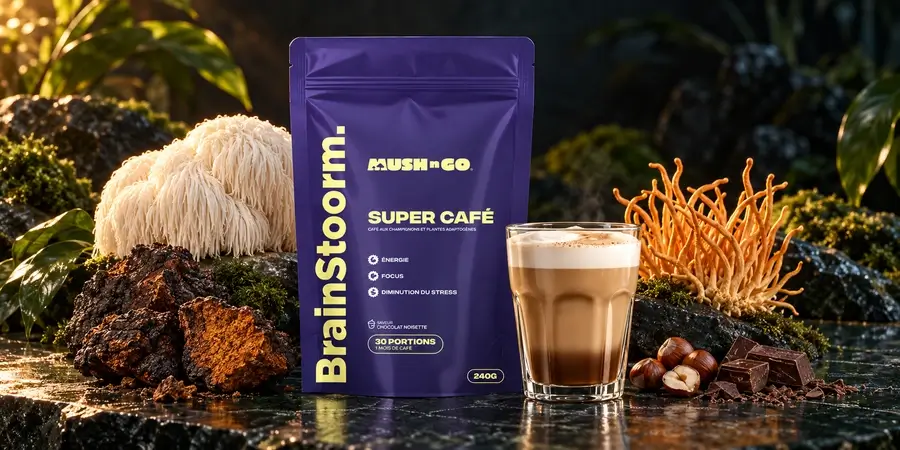
Our pick is Brainstoorm by Mush N Go, No. 1 in our UK mushroom coffee ranking, and not because it has the most lion's mane: Spacegoods, Gold Dust and Dirtea also have 1,000 mg. We pick it because it has the most complete formula in our top 5: lion's mane, cordyceps and chaga at 1,000 mg each (fruiting bodies only, according to the brand), maca 3,000 mg, acacia fibre 2,708 mg, cacao 1,400 mg, ashwagandha 200 mg and rhodiola 25 mg, or 6,225 mg of declared actives per cup.
It also has the least caffeine of the 1,000 mg group: 20 mg, against 50 mg for Gold Dust Cocoa and Dirtea Coffee and 80 to 120 mg for Spacegoods Coffee. No reishi, and the only formula in our top 5 with a declared dose of added fibre. It is made in France, costs £38.00 for 30 servings (£1.27 a cup), comes with a 60-day money-back guarantee and has 692 reviews on Trustpilot, averaging 4.3 out of 5.
The honest caveats: Dirtea gives the same 1,000 mg for about £0.63, and Balance advertises a larger figure, although not per cup. If one ingredient at the lowest price is what you want, Dirtea is the rational choice; for lion's mane in a fuller, low-caffeine cup, Brainstoorm is ours. Links to shops on this site are affiliate links, and our top 5 only lists partner brands.
Lion's mane coffee: frequently asked questions
What is lion's mane coffee good for?
In Great Britain, no seller is allowed to say. No health claim for lion's mane is authorised on the GB register, and the advertising code (CAP, section 15) only permits authorised claims. What you can compare is factual: lion's mane per cup (250 to 1,000 mg among brands that publish it), the form, the caffeine and the price. The small human trials used 1.8 to 3 g a day and did not test coffee.
Does lion's mane interact with caffeine?
We found no human study testing lion's mane and caffeine together, so there is no evidence of an interaction, and no evidence ruling one out either. The mushroom itself contains no caffeine: it comes from the coffee, from 8 mg to 120 mg per cup depending on the brand. The NHS limit of 200 mg a day in pregnancy applies to your total intake.
Why is lion's mane illegal in the UK?
It is not illegal to buy or drink. Wild lion's mane, listed as hedgehog fungus, is protected under Schedule 8 of the Wildlife and Countryside Act 1981. In England and Wales, intentionally picking or destroying it in the wild, or selling wild lion's mane or products made from it, is an offence under section 13. Cultivated lion's mane is not covered by that protection.
What is the downside of lion's mane coffee?
Mainly the cost and the uncertainty. A cup costs £0.63 to £2.00 among the brands we compared, or roughly £19 to £60 a month at one cup a day, and no study shows what a daily cup does. Doses vary fourfold between brands, several ground coffees give no dose per cup, and most contain caffeine. Rare reactions to lion's mane, such as a skin allergy in a worker handling it, have been reported.
Sources
- Docherty S, Doughty FL, Smith EF (2023). The Acute and Chronic Effects of Lion's Mane Mushroom Supplementation on Cognitive Function, Stress and Mood in Young Adults: A Double-Blind, Parallel Groups, Pilot Study. Nutrients. PubMed 38004235
- Mori K, Inatomi S, Ouchi K et al. (2009). Improving effects of the mushroom Yamabushitake (Hericium erinaceus) on mild cognitive impairment: a double-blind placebo-controlled clinical trial. Phytotherapy research : PTR. PubMed 18844328
- Surendran G, Saye J, Binti Mohd Jalil S et al. (2025). Acute effects of a standardised extract of Hericium erinaceus (Lion's Mane mushroom) on cognition and mood in healthy younger adults: a double-blind randomised placebo-controlled study. Frontiers in nutrition. PubMed 40276537
- McCleary BV, Draga A (2016). Measurement of β-Glucan in Mushrooms and Mycelial Products. Journal of AOAC International. PubMed 26957216
- Friedman M (2015). Chemistry, Nutrition, and Health-Promoting Properties of Hericium erinaceus (Lion's Mane) Mushroom Fruiting Bodies and Mycelia and Their Bioactive Compounds. Journal of agricultural and food chemistry. PubMed 26244378
- UK Parliament (1981). Wildlife and Countryside Act 1981, Schedule 8: Plants which are protected. legislation.gov.uk (read on 29 September 2026). legislation.gov.uk
- UK Parliament (1981). Wildlife and Countryside Act 1981, section 13: Protection of wild plants. legislation.gov.uk (read on 29 September 2026). legislation.gov.uk
- Department of Health and Social Care (2026). Great Britain nutrition and health claims (NHC) register. Department of Health and Social Care, gov.uk (last updated 19 May 2026, read on 29 September 2026). GOV.UK
- Committee of Advertising Practice (2026). CAP Code, section 15: Food, food supplements and associated health or nutrition claims. asa.org.uk (read on 29 September 2026). ASA / CAP
- NHS (2026). Foods to avoid in pregnancy (caffeine and herbal teas). nhs.uk (page last reviewed 15 June 2026, read on 29 September 2026). NHS
- Nakatsugawa M, Takahashi H, Takezawa C et al. (2003). Hericium erinaceum (yamabushitake) extract-induced acute respiratory distress syndrome monitored by serum surfactant proteins. Internal medicine (Tokyo, Japan). PubMed 14714963
- Maes MF, van Baar HM, van Ginkel CJ (1999). Occupational allergic contact dermatitis from the mushroom White Pom Pom (Hericium erinaceum). Contact dermatitis. PubMed 10344494
This information is general and does not replace advice from your GP, midwife, pharmacist or a registered dietitian. The studies describe the state of research and are not authorised health claims for any product.

Read next
Mushroom Coffee: What Is It, and Is It Really Good for You?
What mushroom coffee is, what is really in the cup, how much caffeine it has and what the research does and does not show.
Lion's Mane Side Effects: Who Should Avoid It, and Why
What studies and case reports show, who should avoid lion's mane, and what it means for your mushroom coffee.
Dirtea Mushroom Coffee Review: Is It Worth the Price?
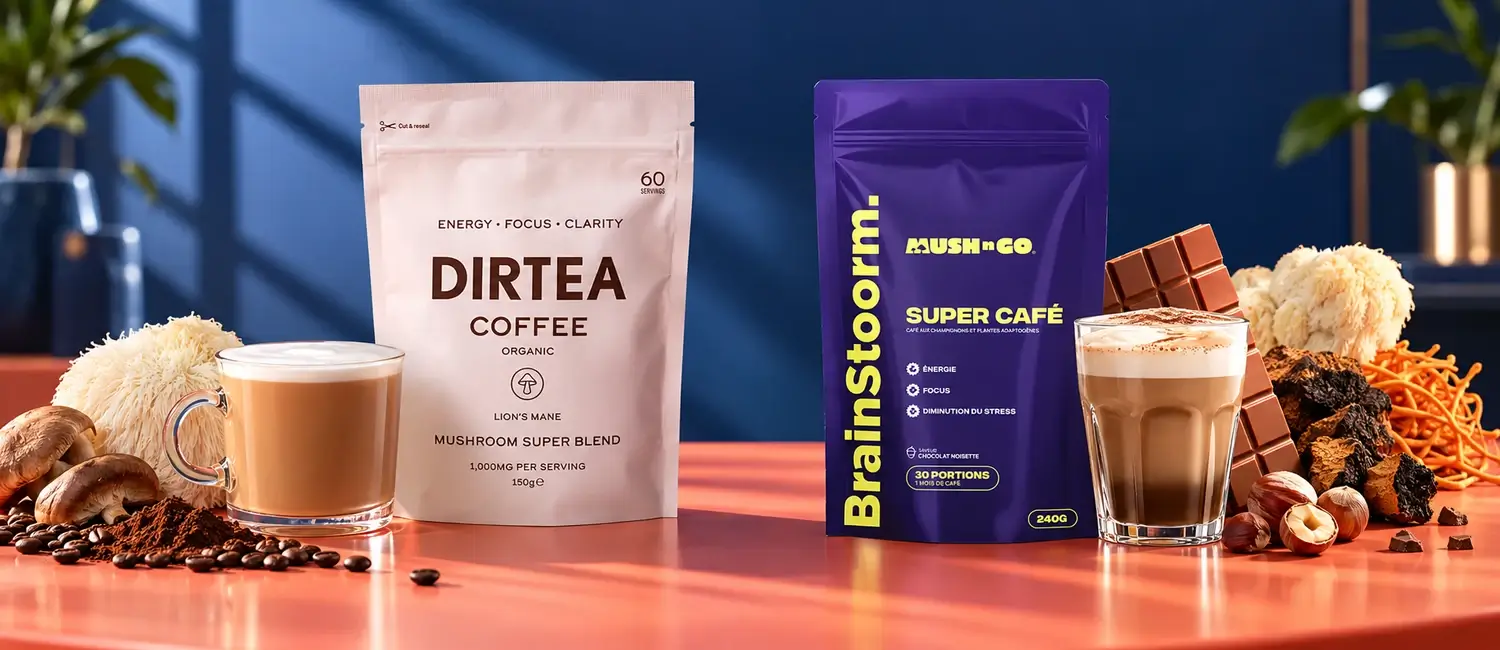
Ingredients and milligrams per serving, caffeine, price per cup in pounds and how Dirtea compares with our No. 1.