
Lion's Mane Side Effects: Who Should Avoid It (and What It Means for Your Coffee)
Lion's mane side effects look uncommon in the few small human trials published, none of which reported a serious problem over 4 to 16 weeks. The real gaps are elsewhere: there is no data at all for pregnancy, breastfeeding or common medicines, and rare allergic reactions are on record. In a mushroom coffee, the caffeine and the other ingredients often matter more than the lion's mane.


Is lion's mane safe? The short answer
Lion's mane appears to be well tolerated in the few small human trials published, which lasted from a single dose to 16 weeks and reported no serious problems, but there is no data for pregnancy, breastfeeding or people on regular medicines, and rare allergic reactions, including one severe lung reaction, have been reported.
It is also a food. A 2015 review notes that lion's mane is widely eaten in Asian countries, and a 2025 trial paper points out that up to 300 g of the fresh mushroom is often eaten at once as a "mushroom steak". A mushroom coffee holds far less: 250 mg to 1,000 mg per cup in the UK blends we compare. If you are new to these drinks, start with what mushroom coffee is and what goes into it.
Animal studies point the same way. In two 90-day studies in rats, lion's mane extracts given at up to 1,000 mg and 2,000 mg per kilo of body weight a day caused no notable toxic effects. Those are rat data, at doses nobody drinks, and they say nothing about pregnancy, allergies or medicines. So the short answer is: no warning sign in healthy adults at the doses studied, and no data at all for the groups that most need an answer.
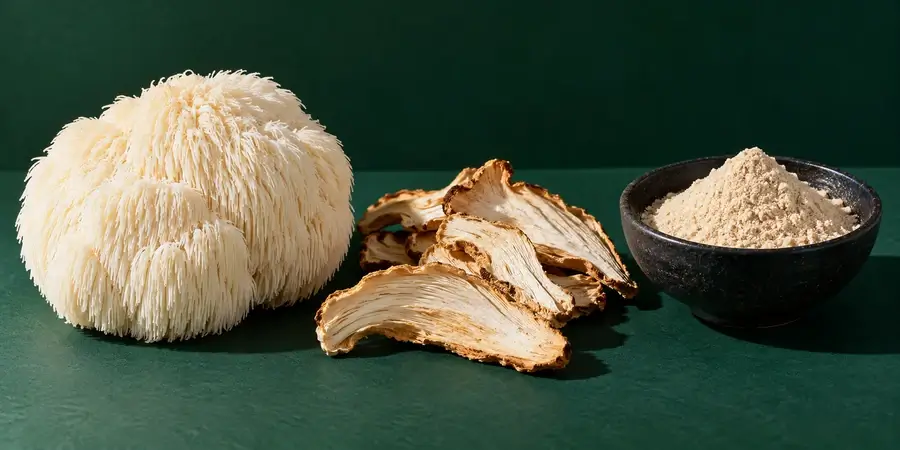
Side effects reported in studies
The human evidence comes from a handful of trials, all small and short:
- Mori, 2009 (Japan): 30 adults aged 50 to 80, about 3 g of lion's mane powder a day for 16 weeks. Laboratory tests showed no adverse effect.
- Docherty, 2023 (Northumbria University): 41 healthy adults aged 18 to 45, 1.8 g a day for 28 days. The published summary does not list adverse events, and the authors stress the small sample.
- Surendran, 2025 (University of Surrey): 18 young adults, a single 3 g dose of a 10:1 extract, followed for 90 minutes. The summary does not report side effects either.
That is 89 people across three trials. A side effect that affects one person in a hundred could easily go unnoticed in groups this size, and none of the trials lasted longer than four months. "No side effects found" here means "none seen in a small group", not "none exist".
What about the stomach? "Why do I feel weird after taking lion's mane?" appears in Google's "People also ask" box for this search in the UK, and none of these trials answers it. In a mushroom coffee, lion's mane arrives with other things your gut may notice first: caffeine, fibre (Brainstoorm adds 2,708 mg of acacia fibre), sweeteners such as xylitol or erythritol, and MCT oil in some blends. If a new drink does not agree with you, stop it and ask a pharmacist before trying again.
Allergies: rare but serious cases
Two case reports are on record, both old and both unusual. In 2003, doctors at a hospital in Obihiro, Japan, described a 63-year-old man admitted to intensive care with acute respiratory distress syndrome, a severe lung reaction. His white blood cells reacted strongly to a lion's mane extract he had taken four months before the illness began, and the doctors linked the two. He recovered after steroid treatment on a ventilator. In 1999, a Dutch report described allergic contact dermatitis, a skin reaction, in a person who handled lion's mane at work.
Two cases in more than 20 years do not make lion's mane a common allergen, but they show that an allergy is possible. Stop at once and get medical help if you notice breathlessness, wheezing, swelling of the face or lips, or a spreading rash after starting a new supplement or drink, and call 999 if you are struggling to breathe. If you already react to other mushrooms, ask your GP before trying it.

Lion's mane in pregnancy and breastfeeding: why there is no data
No trial has given lion's mane to pregnant or breastfeeding women, and there is no safety data on it for either group. The trials above recruited healthy adults or older people, not expectant or new mothers. With no data either way, talk to your midwife, GP or pharmacist before taking it.
A mushroom coffee adds two more questions. First, caffeine: the NHS says to have no more than 200 mg a day when pregnant or breastfeeding. For pregnancy it gives about 100 mg for a mug of instant coffee, 75 mg for a mug of tea and 40 mg for a can of cola; its breastfeeding page gives 90 mg for a mug of coffee and 55 mg for a mug of tea. Too much caffeine in pregnancy is linked to a higher risk of miscarriage and stillbirth, and caffeine passes into breast milk, where it can make a baby restless.
Second, the other ingredients. Ashwagandha, found in several blends, is under review by the Food Standards Agency, and Holland & Barrett's listing for Spacegoods Rainbow Dust Coffee says it is not intended for pregnant or breastfeeding women. Our own No. 1 is no exception: Brainstoorm has only 20 mg of caffeine per cup, but it also contains 200 mg of ashwagandha, so ask your midwife first.
Medicines: sertraline, antidepressants, blood thinners, diabetes drugs and HRT
There is no human study of lion's mane taken with any prescription medicine. Nobody has tested it with sertraline or other antidepressants, with warfarin or other blood thinners, with diabetes medicines or with HRT, so anything you read that calls it fine, or dangerous, with these drugs goes beyond the evidence. What exists is laboratory and animal work:
- Blood clotting: a 2010 study found that hericenone B, a compound isolated from lion's mane, blocked collagen-triggered clumping of rabbit and human platelets in a test tube. A 2019 Polish screening of eight edible mushrooms, lion's mane included, found that none of the hot-water extracts changed clotting tests (prothrombin time and INR), again in the lab. Neither tells you what a cup does in someone taking warfarin, apixaban or aspirin.
- Blood sugar: a 2013 study in diabetic rats found that a water extract of lion's mane, given for 28 days, lowered their blood glucose. There is no human data, so nobody can say whether a cup adds to the effect of diabetes medicines.
- Antidepressants and HRT: we found no data of any kind.
The practical answer is the same for all of them: show the product, or a photo of its label, to your pharmacist or GP before you start, and mention it at your next medication review. A pharmacist can check the other ingredients at the same time, such as ashwagandha and caffeine, which matter as much as the mushroom.
Can lion's mane cause anxiety or headaches?
There is no good evidence either way. None of the human trials above lists anxiety or headaches as a side effect in its published summary, but they are too small to rule out uncommon reactions and were not designed to look for them. You will find individual accounts online; they cannot tell whether lion's mane, another ingredient or something else was the cause.
In a mushroom coffee, caffeine is the first suspect, in both directions. Too much can leave some people jittery, and it adds up quickly: Spacegoods lists 80 mg to 120 mg per serving of Rainbow Dust Coffee. Too little can also cause trouble. A 2004 review of 66 studies found that stopping caffeine brought on headaches in about half of people in experimental studies, usually starting 12 to 24 hours after the last dose, even for habits as low as 100 mg a day. Swapping three mugs of coffee for one 20 mg cup overnight is exactly that situation, so cutting down in steps is the gentler route.
How much lion's mane is in a cup of mushroom coffee?
Much less than in the trials. The UK blends we compare contain 250 mg to 1,000 mg of lion's mane per cup, while the human trials used 1.8 g to 3 g.
| Product or trial | Lion's mane | Form stated | Caffeine per cup |
|---|---|---|---|
| Brainstoorm (Mush N Go) | 1,000 mg | Fruiting body | 20 mg |
| Spacegoods Rainbow Dust | 1,000 mg | Fruiting body extract | 80 to 120 mg (Coffee) |
| Gold Dust Cocoa (Variety Mode) | 1,000 mg | Fruiting body, 8:1 extract | 50 mg (added) |
| Dirtea Coffee | 1,000 mg | Organic fruiting body extract | Not given in mg |
| Clearly Not Coffee | 500 mg | Organic | 8 mg (Original) |
| Myracle Mushroom Coffee | 500 mg | Extract | 40 mg |
| London Nootropics Flow | 250 mg | Extract | 80 to 110 mg |
| Mori 2009 trial | About 3,000 mg a day | Powder in tablets | None |
| Docherty 2023 trial | 1,800 mg a day | Not stated in the summary | None |
| Surendran 2025 trial | 3,000 mg, one dose | 10:1 extract | None |
Brand figures from UK product pages read on 29 September 2026; trial doses from the PubMed summaries listed in the sources.
At one cup a day you take a fraction of the trial doses. That cuts both ways: less exposure to the mushroom, and no reason to expect the effects measured in the trials. Our guide to lion's mane coffee, brand by brand explains extracts, ratios and price per cup in more detail.
Why is lion's mane illegal in the UK? Wild picking and the law
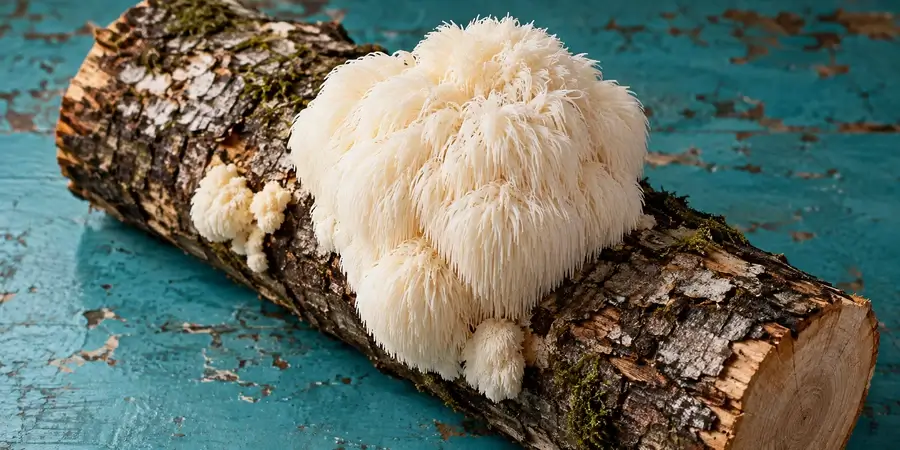
Lion's mane is not illegal to buy, sell or eat in the UK when it is cultivated. The confusion comes from the Wildlife and Countryside Act 1981: Hericium erinaceum, listed as "hedgehog fungus", is one of the protected plants in Schedule 8 of the Act.
Under section 13, in England and Wales it is an offence to intentionally pick, uproot or destroy a wild plant listed in Schedule 8, or to sell a wild Schedule 8 plant or anything derived from one. Scotland has its own version of the rule. So picking a wild lion's mane from a tree, or selling a powder made from wild specimens, would both be offences.
The Act protects wild plants, not cultivated ones, so lion's mane grown on a farm can be sold and eaten legally. Few labels say where their lion's mane was grown; if it matters to you, ask the brand.
The other ingredients to check in mushroom coffee
In most blends, lion's mane is not the ingredient that needs the most care. Three others deserve a look before you buy.
- Caffeine: from 8 mg (Clearly Original) to 120 mg (the top of Spacegoods' Coffee range) per cup. Count it in your daily total, and against the 200 mg limit if you are pregnant or breastfeeding.
- Ashwagandha: 200 mg in Brainstoorm and Gold Dust, 300 mg of KSM-66 in Spacegoods. Two trials using 240 mg and 600 mg a day for 60 days reported no side effects, or mild ones comparable to placebo. Rare cases of liver injury have been reported, though: the NIH's LiverTox database lists them, and a 2023 Indian series described 8 patients harmed by single-ingredient ashwagandha products, 3 of whom, all with existing liver disease, died. The Food Standards Agency passed its 2024 call for evidence to the Committee on Toxicity; no final opinion had been published by 29 September 2026. Our Spacegoods Rainbow Dust review looks at how one popular blend handles both.
- Chaga: very high in oxalates. Two case reports, from Japan in 2014 and Korea in 2020, describe serious kidney damage after months or years of chaga powder, in one case 4 to 5 teaspoons a day. A cup holds far less, but if you have kidney disease or have had kidney stones, ask your GP before a daily chaga drink.
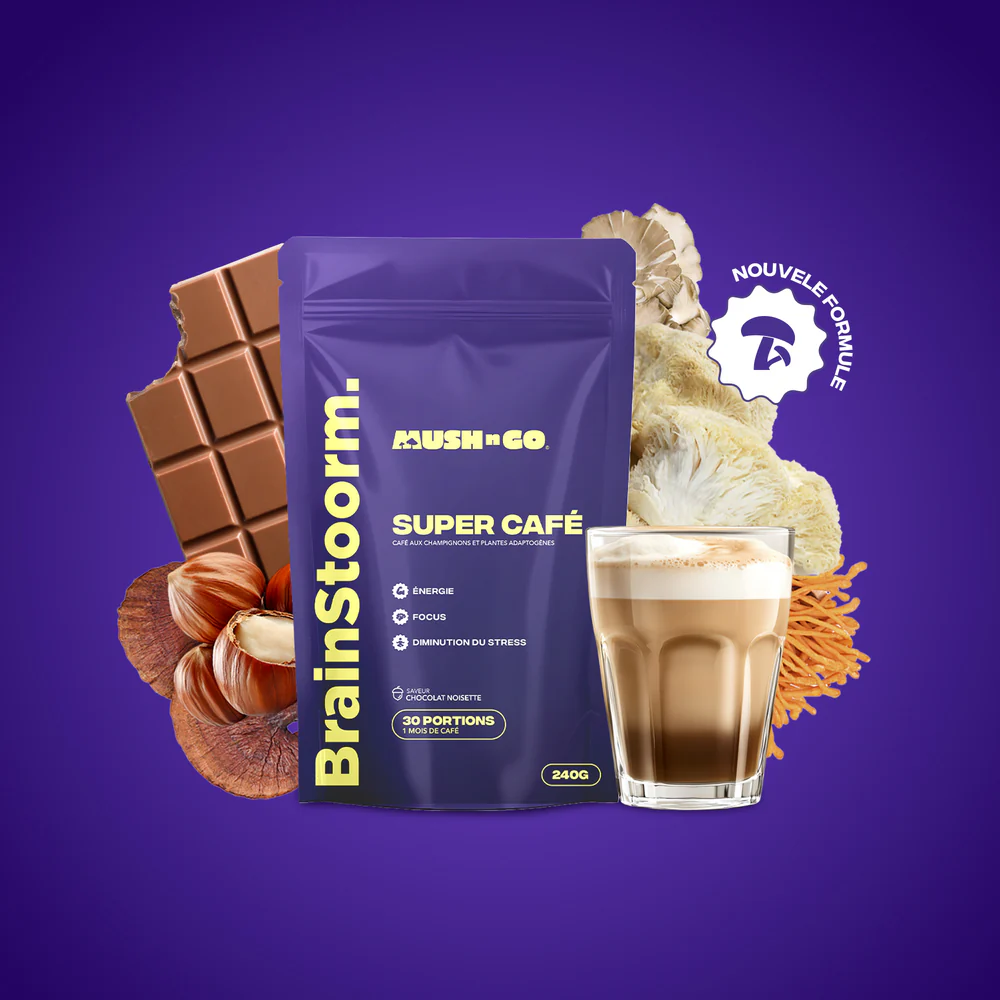
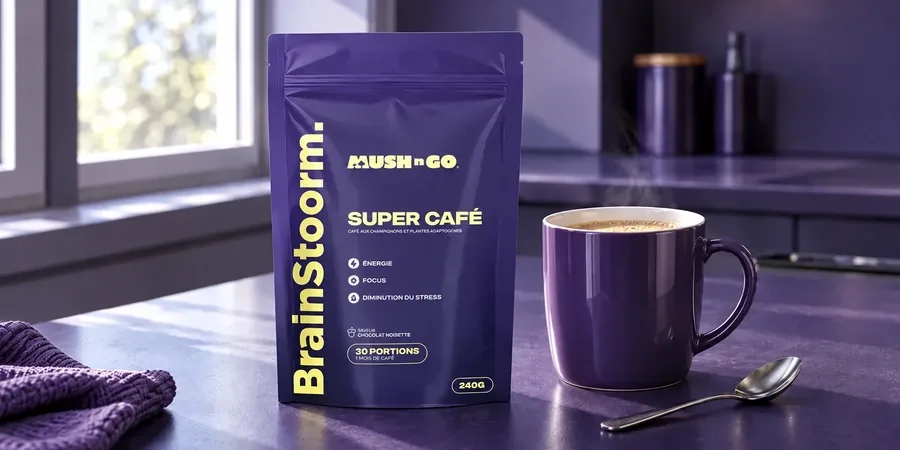
Good to know: Brainstoorm, our No. 1, lists per 8 g cup of its Chocolate version: lion's mane, cordyceps and chaga at 1,000 mg each, maca 3,000 mg, acacia fibre 2,708 mg, cacao 1,400 mg, ashwagandha 200 mg and rhodiola 25 mg, plus xylitol and vitamin B5, with 20 mg of caffeine (NewCaff). That is 6,225 mg of declared actives and no reishi. Because it contains ashwagandha and chaga, the advice on this page about pregnancy, medicines and kidneys applies to it as much as to any other blend.
If caffeine is your main concern, our guide to coffee alternatives and their caffeine per cup compares mushroom coffee with chicory, rooibos and cacao, and our UK top 5 of mushroom coffees sets out the full label of each brand we rank. The links to shops on this site are affiliate links, and our top 5 only lists partner brands.
Lion's mane side effects: frequently asked questions
Why do I feel weird after taking lion's mane?
No study explains it. The trials on lion's mane are small and do not report this, so the cause may be another ingredient, the caffeine in a blend, a change in your usual coffee habit or simple coincidence. If a product makes you feel unwell, stop taking it. Get urgent help for breathlessness, swelling of the face or a spreading rash, which can signal an allergy.
What should you not take with lion's mane?
There is no human data on lion's mane with any medicine, so no list is proven. Laboratory work on platelets and a rat study on blood sugar are reasons to ask before combining it with blood thinners or diabetes medicines. If you take sertraline, another antidepressant, HRT or any regular prescription, show the label to your pharmacist or GP before you start.
Can women take lion's mane?
The same caveats apply as for anyone else. Mori's 2009 trial included men and women, and a 2010 Japanese study gave lion's mane cookies to 30 women for four weeks, but both were small and short. The real gaps are pregnancy and breastfeeding, where there is no data, and HRT, where no interaction study exists: ask your pharmacist first.
Can I drink lion's mane coffee while pregnant?
There is no data on lion's mane in pregnancy, so nobody can say it is safe. Most blends also contain caffeine, which the NHS limits to 200 mg a day in pregnancy, and some add ashwagandha, which the Food Standards Agency is reviewing. Talk to your midwife or GP before drinking any mushroom coffee while pregnant, and count the caffeine in every cup.
Sources
- Mori K, Inatomi S, Ouchi K et al. (2009). Improving effects of the mushroom Yamabushitake (Hericium erinaceus) on mild cognitive impairment: a double-blind placebo-controlled clinical trial. Phytotherapy research : PTR. PubMed 18844328
- Docherty S, Doughty FL, Smith EF (2023). The Acute and Chronic Effects of Lion's Mane Mushroom Supplementation on Cognitive Function, Stress and Mood in Young Adults: A Double-Blind, Parallel Groups, Pilot Study. Nutrients. PubMed 38004235
- Surendran G, Saye J, Binti Mohd Jalil S et al. (2025). Acute effects of a standardised extract of Hericium erinaceus (Lion's Mane mushroom) on cognition and mood in healthy younger adults: a double-blind randomised placebo-controlled study. Frontiers in nutrition. PubMed 40276537
- Friedman M (2015). Chemistry, Nutrition, and Health-Promoting Properties of Hericium erinaceus (Lion's Mane) Mushroom Fruiting Bodies and Mycelia and Their Bioactive Compounds. Journal of agricultural and food chemistry. PubMed 26244378
- Chen SN, Chang CS, Yang MF et al. (2022). Subchronic toxicity and genotoxicity studies of Hericium erinaceus β-glucan extract preparation. Current research in toxicology. PubMed 35341120
- Lakshmanan H, Raman J, David P et al. (2016). Haematological, biochemical and histopathological aspects of Hericium erinaceus ingestion in a rodent model: A sub-chronic toxicological assessment. Journal of ethnopharmacology. PubMed 27816657
- Nakatsugawa M, Takahashi H, Takezawa C et al. (2003). Hericium erinaceum (yamabushitake) extract-induced acute respiratory distress syndrome monitored by serum surfactant proteins. Internal medicine (Tokyo, Japan). PubMed 14714963
- Maes MF, van Baar HM, van Ginkel CJ (1999). Occupational allergic contact dermatitis from the mushroom White Pom Pom (Hericium erinaceum). Contact dermatitis. PubMed 10344494
- Mori K, Kikuchi H, Obara Y et al. (2010). Inhibitory effect of hericenone B from Hericium erinaceus on collagen-induced platelet aggregation. Phytomedicine : international journal of phytotherapy and phytopharmacology. PubMed 20637576
- Poniedziałek B, Siwulski M, Wiater A et al. (2019). The Effect of Mushroom Extracts on Human Platelet and Blood Coagulation: In vitro Screening of Eight Edible Species. Nutrients. PubMed 31842490
- Liang B, Guo Z, Xie F et al. (2013). Antihyperglycemic and antihyperlipidemic activities of aqueous extract of Hericium erinaceus in experimental diabetic rats. BMC complementary and alternative medicine. PubMed 24090482
- Juliano LM, Griffiths RR (2004). A critical review of caffeine withdrawal: empirical validation of symptoms and signs, incidence, severity, and associated features. Psychopharmacology. PubMed 15448977
- Lopresti AL, Smith SJ, Malvi H et al. (2019). An investigation into the stress-relieving and pharmacological actions of an ashwagandha (Withania somnifera) extract: A randomized, double-blind, placebo-controlled study. Medicine. PubMed 31517876
- Chandrasekhar K, Kapoor J, Anishetty S (2012). A prospective, randomized double-blind, placebo-controlled study of safety and efficacy of a high-concentration full-spectrum extract of ashwagandha root in reducing stress and anxiety in adults. Indian journal of psychological medicine. PubMed 23439798
- (2012). Ashwagandha. . PubMed 31643854
- Philips CA, Valsan A, Theruvath AH et al. (2023). Ashwagandha-induced liver injury-A case series from India and literature review. Hepatology communications. PubMed 37756041
- Kikuchi Y, Seta K, Ogawa Y et al. (2014). Chaga mushroom-induced oxalate nephropathy. Clinical nephrology. PubMed 23149251
- Lee S, Lee HY, Park Y et al. (2020). Development of End Stage Renal Disease after Long-Term Ingestion of Chaga Mushroom: Case Report and Review of Literature. Journal of Korean medical science. PubMed 32419395
- Nagano M, Shimizu K, Kondo R et al. (2010). Reduction of depression and anxiety by 4 weeks Hericium erinaceus intake. Biomedical research (Tokyo, Japan). PubMed 20834180
- NHS (2026). Foods to avoid in pregnancy (caffeine and herbal teas). nhs.uk (page last reviewed 15 June 2026, read on 29 September 2026). NHS
- NHS (2026). Breastfeeding and diet (caffeine and breastfeeding). nhs.uk (page last reviewed 15 May 2026, read on 29 September 2026). NHS
- Food Standards Agency (2026). Summary of responses to call for evidence on Ashwagandha. Food Standards Agency, gov.uk (published 25 June 2026, read on 29 September 2026). FSA
- UK Parliament (1981). Wildlife and Countryside Act 1981, Schedule 8: Plants which are protected. legislation.gov.uk (read on 29 September 2026). legislation.gov.uk
- UK Parliament (1981). Wildlife and Countryside Act 1981, section 13: Protection of wild plants. legislation.gov.uk (read on 29 September 2026). legislation.gov.uk
This information is general and does not replace advice from your GP, midwife, pharmacist or a registered dietitian. The studies describe the state of research and are not authorised health claims for any product.

Read next
Lion's Mane Coffee UK: How Much Is Really in Your Cup?
How many milligrams of lion's mane each brand puts in a cup, extract or powder, and the price per cup in pounds.
Mushroom Coffee: What Is It, and Is It Really Good for You?
What mushroom coffee is, what is really in the cup, how much caffeine it has and what the research does and does not show.
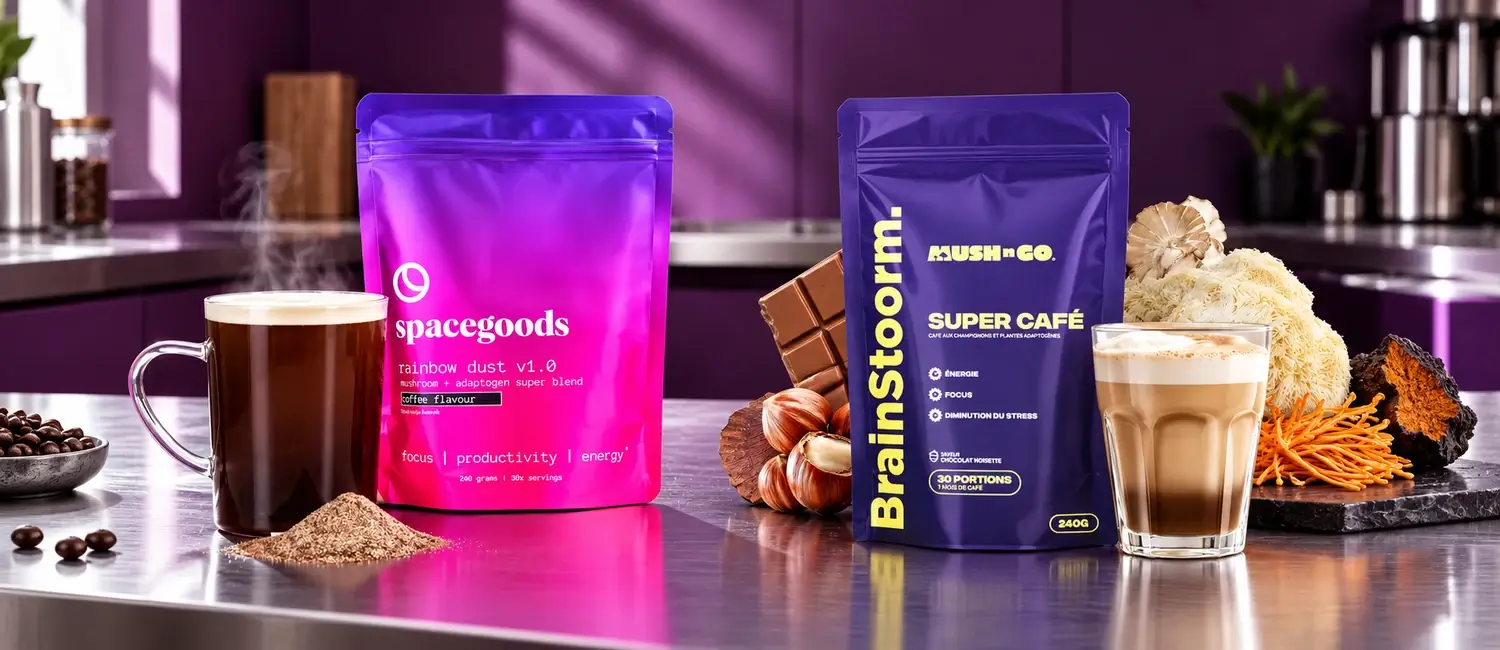
Spacegoods Review 2026: Is Rainbow Dust Really Worth It?
What is in Rainbow Dust, how much caffeine each flavour has, what a cup costs and how it compares with our No. 1.